
Link a Google Sheets Account to Workload 🔗

Adam Browder
July 9, 2025
Google Sheets powers everything from growth reports to client trackers—but it’s even more valuable once you link a Google Sheets account to Workload. Your spreadsheets evolve from simple data tables into live dashboards that update themselves. Workload handles the syncs, updates, and notifications automatically, so your team can focus on what’s next instead of maintaining rows and formulas.
Imagine your campaign results filling in as soon as new metrics arrive, invoices logging themselves when payments clear, or team capacity charts updating in real time as projects move forward. Workload makes it happen behind the scenes, keeping every cell accurate and up to date.
By connecting Google Sheets to Workload, you turn your manual updates into smart automations that run on their own. Reports refresh instantly, numbers stay consistent across apps, and your entire team works from the same live data source—without lifting a finger.
🔀 Methods to Set Up a Google Sheets Connection in Workload
You can connect Google Sheets in multiple ways. Use the Connections tab in the Workload Dashboard if you’re setting up for the first time, or connect it from a step while you’re building your automation.
🖥️ From the Dashboard
Click on the Connections tab in the left-hand menu, then select the blue + Add Connection button.

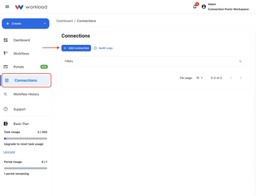
In the popup window, search for Google Sheets and select it from the list of available apps.


When prompted, choose the Google account you want to connect to Workload.

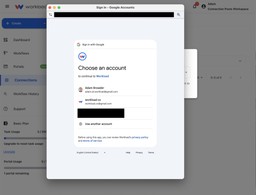
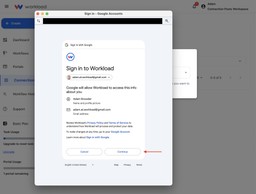
Click Continue to sign in and allow Workload to access your Google Sheets data securely.

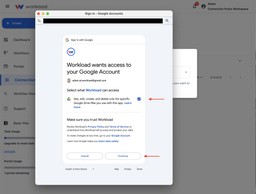
Grant permission for Workload to view, edit, and manage only the specific Sheets you choose to share. You’ll see an authorization window confirming this limited access.

Next, enter a name for your connection—something recognizable like Google Sheets – Marketing Reports—then click OK to save it.


Once connected, Google Sheets will appear in your list of active connections, ready to use in any automation you build.

Note: When you use Google Sheets in a workflow for the first time, you’ll be prompted to choose which specific files or folders to share with Workload. Only those selected Sheets will be accessible for triggers and actions.

🪜 From an Automation Step
Add a Google Sheets step to your automation and click Sign in under the Account tab.

When the Google pop-up appears, select the account you’d like to use for this connection.

Click Continue to grant Workload permission to access your Google Sheets data securely.

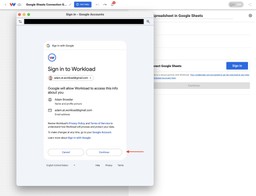
You’ll see a confirmation screen showing what Workload can access. Check the box to allow access to only the specific files and folders you choose, then click Continue.

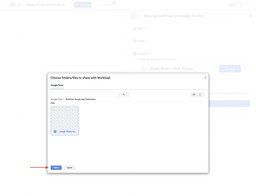
Next, select the exact Sheets or folders you want to share with Workload from your Google Drive. Click Select to confirm your choices.
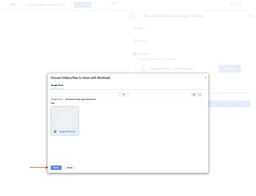
Once connected, your account name will appear in the Account field. You can click Change anytime to update which files or folders are shared, then click Continue to move to the next step of your automation.

💡 What You Can Do Next
Once you link a Google Sheets account to Workload, it becomes a flexible hub for automations that keep your data organized and always up to date. Here are a few ways teams use it with Workload:
- Automatically log new form submissions from tools like Typeform or Jotform into a spreadsheet for easy tracking.
- Add new CRM records—such as leads or deals—to a sheet the moment they’re created so your sales team always sees real-time data.
- Post marketing campaign results straight into Sheets from apps like Facebook Ads, Google Ads, or HubSpot to keep performance dashboards current.
- Use Sheets as a reporting layer, combining data from multiple sources (finance, operations, or customer support) into one live document.
- Send alerts or summaries to Slack or email whenever spreadsheet data changes, keeping teams aligned without checking cells manually.
With Google Sheets linked to Workload, your spreadsheets become a living source of truth—updated instantly, shared automatically, and ready for every department to act on.
Tags
Ready to automate your workflows?
Start building powerful automations with Workload today.
Get Started Free